Sell Rare & Key-Date Coins in McKinney, TX
Rare comes down to three things at once: the date, the mint and the condition. We check all three with you and give you an honest answer, even when it is not the one you hoped for.
Monday to Friday, 9am to 5pm, by appointment
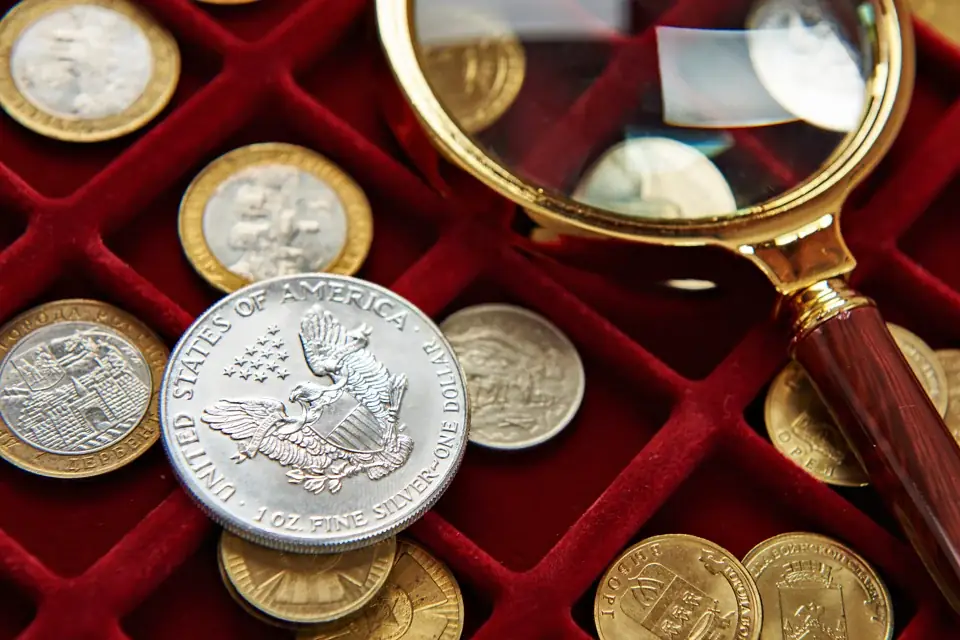
- Every weighing happens in front of you
- Photo ID needed at the meeting
- Walk away anytime, no hard feelings
- Appointments only, never a queue
Dates collectors hunt for, series by series
Every classic U.S. series has a few dates and mint marks that are harder to find than the rest. These are well-known examples. Finding one of these dates is a reason to call, though condition and authenticity still decide the outcome.
| Series | Dates to look for |
|---|---|
| Indian Head cents (1859 to 1909) | 1877, 1908-S, 1909-S |
| Lincoln wheat cents (1909 to 1958) | 1909-S VDB, 1909-S, 1914-D, 1922 with no mint mark, 1931-S |
| Buffalo nickels (1913 to 1938) | 1913-S Type 2, 1918/7-D, 1926-S, 1937-D three-legged |
| Jefferson nickels (1938 on) | 1939-D, 1950-D |
| Mercury dimes (1916 to 1945) | 1916-D, 1921, 1921-D, 1942/1 |
| Standing Liberty quarters (1916 to 1930) | 1916, 1918/7-S |
| Washington quarters (1932 to 1964 silver) | 1932-D, 1932-S |
| Walking Liberty halves (1916 to 1947) | 1916-S, 1921, 1921-D, 1921-S, 1938-D |
| Morgan dollars (1878 to 1921) | 1889-CC, 1893-CC, 1893-S, 1895 |
| Peace dollars (1921 to 1935) | 1921 high relief, 1928, 1934-S |
Not sure where the mint mark is?
It moves around from one design to the next. Our sell coins page shows where to look on each common series.
Three honest checks you can do at home
Famous coins are also the most faked. These quick checks weed out the most common disappointments before you get your hopes up.
-
The magnet test for 1943 cents
Nearly all 1943 cents are zinc-coated steel and common. A genuine copper 1943 cent is famous, and almost every one offered is a plated steel cent or an altered 1948. If yours sticks to a magnet, it is steel.
-
Look for the word COPY
Replicas of famous coins are sold in gift shops and online. By law many are marked COPY, often small and near the rim. A coin with that word is a souvenir.
-
Study the date and mint letter
Valuable dates attract alterations: a D glued onto a Philadelphia coin, or a 3 reshaped into an 8. Under magnification the added metal or tool marks usually show. We check this on every key date.
Think you found one?
Call or send the form, and add a photo of the date side if you can. We will book a weekday time to look at it together.
Real varieties, and what only looks like one
Mint errors and die varieties have a devoted following. So many damaged coins get mistaken for errors that it helps to know the difference.
Worth showing us
- Doubled die cents such as the 1955, 1972 and 1995, where the lettering looks clearly doubled with rounded, separate outlines
- Overdates such as the 1942/1 Mercury dime and 1918/7-D Buffalo nickel
- The 1937-D Buffalo nickel with one front leg missing from the bison
- The 2004-D Wisconsin quarter with an extra leaf on the corn
- Off-center strikes, double strikes, and coins struck on the wrong blank
Usually damage, not a mint error
- Flat, shelf-like doubling on letters, which comes from a worn press and is common
- Gold or colored plating added after the coin left the Mint
- Coins squeezed, hammered, drilled or flattened at home or in a shop
- Thin or bubbly coins that were exposed to acid or heat
Reading a grade label
U.S. coins are graded on a scale from 1 to 70. The letters before the number describe the level of wear, and on scarce dates each step up the scale can change the picture a great deal.
The grade is about condition only. A high grade on a common date is still a common date, which is why we look at both together.
- G and VG (4 to 10): heavily worn, with the main outlines and date still readable
- F and VF (12 to 35): moderate wear, with more of the finer detail showing
- EF or XF (40 to 45): light wear on the highest points only
- AU (50 to 58): just a trace of wear, with much of the original luster left
- MS (60 to 70): mint state, never circulated, graded on marks, luster and strike
- PR or PF: a proof, struck for collectors on polished dies
How we look at a possible rarity
-
Name what is on the table
Step one is naming each coin by series, year and mint mark, holder and all.
-
Weigh metal in plain sight
You watch the display on every weighing, start to finish.
-
Sort collector value from metal value
Year, mint mark and grade can push a coin past its metal value. We point out exactly which of yours qualify.
-
Show our math, then you choose
We lay out how the number was reached. Accept, pass, or sell only the pieces you want to part with.
Rare coin questions, answered plainly
My coin is very old. Is it rare?
Age alone rarely makes a coin valuable. Plenty of coins from the 1800s survive in large numbers. What counts is how many were made, how many survive, and the condition of yours.
Should I send my coin to PCGS or NGC before selling?
Sometimes it pays off, often it does not. Grading costs money and takes weeks. Show us the coin first and we will tell you plainly whether we think grading is worth it.
Can you tell me what my rare coin is worth before I come in?
Not responsibly. Two coins of the same date can be far apart in value because of wear, cleaning or a tiny mark. A photo through the form lets us say whether it looks promising, and the appointment settles it.
Does cleaning help a rare coin?
It hurts it, and the damage is permanent. Cleaning strips the original luster and leaves hairline scratches. Grading services label such coins as cleaned or as having surface damage.
What if my coin turns out to be common?
Then we tell you, and you leave with the coin unless you want to sell it. Most people would rather know for sure than keep wondering.
Coins already in a slab
PCGS and NGC are the two largest grading services. Each seals the coin in hard plastic with a label showing the grade and a certification number you can look up on the service's website.
- Keep the holder sealed. A coin taken out loses its grade.
- Slabs from smaller graders are welcome, and so are raw coins.
- We still examine the coin itself through the plastic.
Coins with silver or gold inside
A scarce silver or gold coin is always backed by the metal inside it. See our pages on silver coins and gold coins for how the metal side works.
Bringing us a coin you think is special
Here is how it goes, from the first call to a clear answer. Bring a second set of eyes if you like.
-
Start with a call or the form
Call (469) 249-8420 or send the short form, with a photo if you can. Form requests get a phone call back on business days.
-
Choose where to meet
Weekdays, 9am to 5pm, by appointment, at our private McKinney office, your home or a secure location such as your bank. A bank is a good fit for a valuable coin already in a safe deposit box.
-
Leave the coin in its holder
Flip, album, capsule or slab, bring it just as it is, along with a photo ID.
-
Get a straight answer
We go over the date, mint mark, surfaces and any alterations with you. If there is an offer, you can take it or leave it, coin by coin.
Photos help us prepare
The form takes up to four photos. Send the date and mint mark side, the back, and the slab label if there is one. Send Photos
Rare coin owners across Collin County
Our office is in McKinney, and appointments can also happen at your home or your bank. Times are rough no-traffic estimates from the McKinney square.
Prosper is about 22 minutes away, Plano about 23 minutes, and Frisco about 25 minutes. Every town we serve is listed on the service area page.
If the coin is part of a larger group, our coin collection page explains how albums and sets stay together during the appointment.
Set up your appointment
- Based in
- McKinney, TX, serving Collin County
- Hours
- Monday to Friday, 9am to 5pm, by appointment
- Where we meet
- At our private McKinney office, your home or a secure location such as your bank
- Have ready
- Your photo ID and the pieces you plan to sell
Our office address stays off the web for everyone's safety. We give it to you by phone once a time is booked.
You receive an offer to buy, which is different from a written appraisal prepared for insurance, probate or tax purposes.
Request a quote
Takes under a minute. We ring you back on a weekday, or you can call (469) 249-8420 now.